
Improving Teaching Checklist

First, you really need to know something about the ambition of Bill Gates. He is the most important person born in the 20th century. He’s had a bigger impact than Churchill, Hitler, Stalin, Martin Luther King, Ghandi, Nelson Mandela, Oppenheimer, anyone you care to mention.
Here’s how.
He wants to change lives. He has invested over £200 million to try to improve teaching. Before we look at that, here’s some measures of his impact in changing World health.

Bill Gates is more than a superhero. He has saved 44 million lives since 2000.
You can’t picture what that number means, because it is incomprehensible.
If you added up everyone living in Canada, and then everyone living in New Zealand, you would still have a couple of million spare.
Or how about this: the total number of European deaths from WWII is estimated between 15-20 million.
For WW1, it was 22 million.
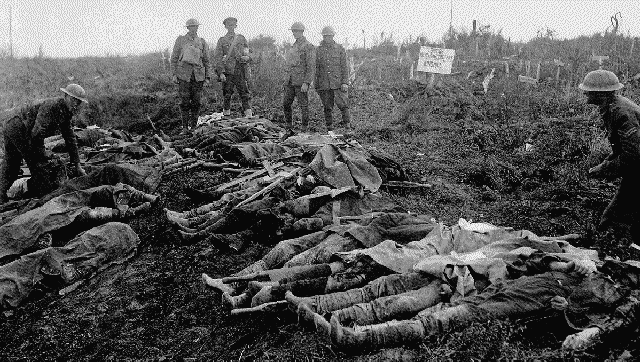
Bill Gates has saved more lives than if he had gone back in time and prevented WW1 and WW2.
Here are the numbers for some of the diseases he has in his sights:
Reduced Deaths: Malaria deaths worldwide fell by over 30% between 2000 and 2019, an effort in which the Gates Foundation played a central role. That’s 12.7 million lives.
Reduced Infections: New HIV infections globally fell by 40% between 2000 and 2015. This averted 30 million new HIV infections and nearly 8 million AIDS-related deaths since 2000
Polio Eradication: A top priority for the Foundation, its partnership with the Global Polio Eradication Initiative (GPEI) has helped reduce wild polio cases by over 99.9% since 1988, with only a few cases remaining in two endemic countries (Afghanistan and Pakistan). Over 1.5 million lives saved.
Bill Gates Tried to Improve Teaching And Failed
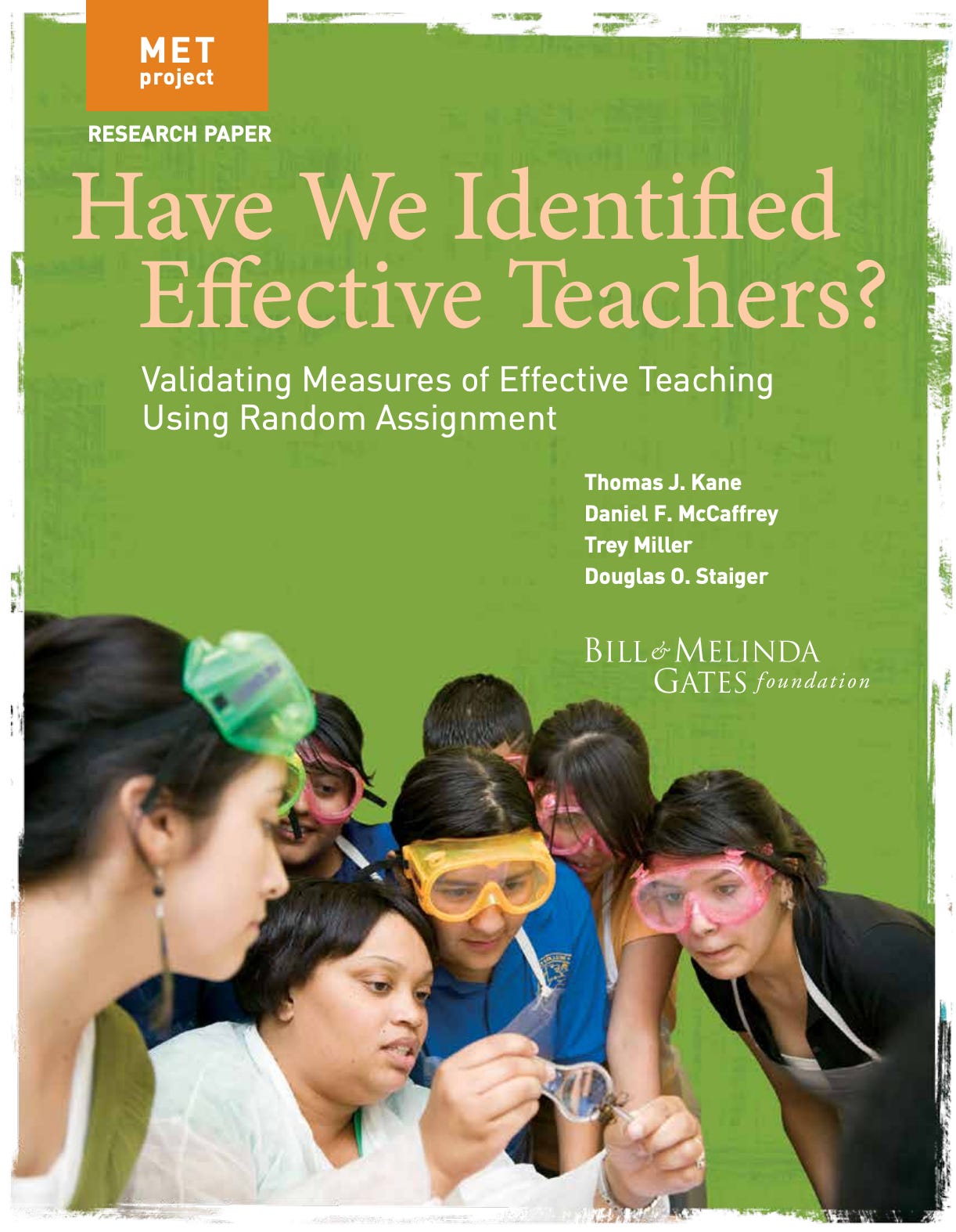
So far he invested $212 million into the Measures of Effective Teaching Project, analysing and supporting thousands of teachers.
He worked out exactly how to spot great teachers:
Student voice
Lesson visits
Value added over time
There are teachers in every school who you can identify as brilliant with near 100% certainty. Then, all you need to do is find a way to get them to train your teachers.
In one year, the best single predictor of how effective your teacher is their value added.
In one year, the best predictor of how effective your teacher is is a combined score, 1/3 based on student voice, 1/3 based on lesson visits, 1/3 based on last year’s value added.
Over multiple years, you get certainty.
For example, if you have 11 years of value added data for one teacher, this will predict their value added next year with 90% accuracy. That’s with a single measure, without lesson visits or student voice.
If you looked at student voice, your records of lesson visits and value added over 5 years, you could have 100% confidence in who your top 10 teachers are.
How could you use those top 10 to improve everyone else in your school, if you really thought about it?
I ask this because the findings of the Measures of Effective Teachers Project have been around for 10 years. You’ve probably never heard of them. The man who has gone back in time and stopped both WWI and WW2 from killing anyone in Europe hasn’t found a way to make schools give a toss.
If that sounds vehement, it is.
Teachers are some of the most well meaning, supportive and altruistic people I know. I love teachers. I married one. My daughter is a teacher.
But we are also absolutely resistant to evidence based thinking. We are brilliant at forming our own deeply held beliefs, and then picking any evidence to back it up, and ignoring every other piece of evidence which tells us we are possibly wrong, probably wrong, actually, almost definitely wrong.
If your school is rocketing up the league tables, your beliefs about improving teachers are probably right. Crack on. In fact, say hello in the comments.
But if your school isn’t improving in the league tables, year on year, or maintaining a really high position, you are probably wrong.
You’ll know if you are wrong if you have a list of any of these reasons why it is not your fault -
you’ve inherited some poor teachers
recruitment,
funding,
parents,
disadvantage,
SEND,
working class white families,
A lack of EAL students
poor middle leaders
poor pastoral leaders
unhelpful scrutiny from Ofsted
insufficient support from MATs or central teams
competition from other schools …
These are all very real. But they are also very real for all the schools in the country who are just like yours, but where students make much better progress.
Because I may be just as guilty as everyone else of cherry picking my evidence, here is some of it for you to test. I put these sources into NotebookLM. You can access the Notebook here, and ask your own questions.
Sources:
1. Do We Know a Successful Teacher When We See One? Experiments in the Identification of Effective Teachers, Michael A. Strong, Texas Tech University
September 2011, DOI: 10.1177/0022487110390221
2. Dylan Wiliam, Embedding Formative Assessment
3. DESIGNING TEACHER EVALUATION SYSTEMS: New Guidance from the Measures of Effective Teaching Project
4. Improving Education: A Triumph of Hope Over Experience Revisited Three Years On, Robert Coe, The Telegraph Festival of Education, Wellington College, 4 June 2016
5. ‘MET’ Made Simple: Building Research-Based Teacher Evaluations
6. Improving Teaching Effectiveness: RAND Corporation
7. MET Project Final Report: The Intensive Partnerships for Effective Teaching Through 2015–2016
8. MET Project: Learning About Teaching – Initial Findings from the Measures of Effective Teaching Project
9. MET Project: Working with Teachers to Develop Fair and Reliable Measures of Effective Teaching
You can download all the MET Project reports here.
How to Use Your Highly Effective Teachers Checklist
This is the suggested list. I’m not going to weigh each up - I’m giving it to you without bias. That’s just what the evidence says.
This scenario leverages a key principle of effective teaching research: once highly effective (HE) teachers are reliably identified (which requires longitudinal data, such as your proposed five years, as effectiveness measures stabilise over time), they should be utilized not for simple retention, but as agents of professional growth for the entire staff.
The sources suggest that the most powerful mechanism for improvement involves creating Career Ladders (CLs) and targeted Professional Development (PD) that utilize these HE teachers’ expertise. (Career Ladders in this context means identifying your best teachers and giving them paid roles within the school to improve the quality of education).
You’re facing budget constraints, I know. But, let’s start with what you might do.
Here are 15 ways your best 10 teachers (identified via effectiveness measures like Value-Added, observations, and student surveys) could be used to raise the standard of teaching, organized by the strategic levers mentioned in the sources:
I. Leveraging Expertise through Professional Development and Coaching
1. Instructional Coaching for Novices: Appoint HE teachers to formal Mentor Teacher or instructional coaching roles specifically aimed at guiding new teachers in their first one or two years, providing them with ongoing support and feedback.
2. Targeted Coaching for Struggling Teachers: Design a specific CL position, such as a Learning Coach or a member of a Performance Improvement Team (PIT crew), responsible for formally coaching new and struggling teachers with persistently low effectiveness ratings, providing individualized support to address specific needs identified by evaluations.
3. Lead School-Based Collaboration (PLCs): Designate these teachers as PLC Leaders/Coaches who organize and facilitate teacher collaboration, learning communities, or subject-area teams. School-based teacher collaboration is frequently rated by teachers as the most useful form of PD.
4. Demonstrate Exemplary Practice: Use the best teachers as Demonstration/Lab Teachers whose classes are video-recorded or directly observed by peers and novice teachers for instructional purposes. This addresses the challenge that teaching expertise often cannot be reduced to words but is learned best through practice.
5. Design Needs-Based PD: Have HE teachers serve as Instructional PD Teachers or Training Facilitators to design and lead PD sessions that are aligned with the observation rubric indicators where the overall staff is weakest, ensuring the PD is relevant to the needs identified by the teacher evaluation system.
6. Provide Actionable Feedback: Train these HE teachers to be highly qualified observers who provide useful and actionable feedback to colleagues, particularly focusing on components found to be weak in most classrooms, such as Communicating with Students or Using Questioning and Discussion Techniques.
II. Modelling Specific High-Leverage Instructional Practices
HE teachers can focus on modeling and coaching specific instructional components identified in the research as distinguishing effective teachers:
7. Model Clarity and Communication: Demonstrate techniques for the clearest delivery of instruction, as Clarify (from the 7Cs) and Communicating with Students (from FfT) are prime candidates for focus because they predict student outcomes and are strong predictors of effective classroom management (Control and Challenge).
8. Model Rigorous Questioning: Implement and model the use of questions of high cognitive challenge and focus on the reasoning exhibited by students during discussion, rather than just accepting correct answers.
9. Model Assessment for Learning: Emphasize techniques for continuously Checking for Student Understanding and giving feedback about the learning process, which were identified as predictive items from the instructional domain.
10. Model Rigor and Persistence: Explicitly model how they consistently push students to think rigorously and ensure students persist in the face of difficulty (the Challenge component of effectiveness).
III. Systemic Leadership and Cultural Change
11. Lead Curriculum Improvement: Place HE teachers on teams to lead curriculum improvement efforts, which the sources suggest is a major lever that can lead to significant student progress, potentially yielding 25% more progress in a year compared to choosing a less effective curriculum.
12. Integrate Data into Instruction: Utilize top teachers as Data Fellows or leaders to help colleagues interpret and use student performance data effectively in their daily practice.
13. Take on Administrative Burden: Use HE teachers in formal CL roles to take on some administrative responsibilities, such as mentoring, which frees up School Leaders (SLs) and principals to dedicate more time to instructional leadership and school improvement.
14. Shift the Professional Culture: Champion the culture that suggests every teacher should aim to get better—not because they are inadequate, but because they can be even better—thus detoxifying professional development and shifting the focus away from summative grading.
15. Address Equity through Placement: Assign HE teachers to classes or schools with the highest proportion of high-need students (e.g., Low-Income Minority (LIM) students). This strategic placement directly uses the HE teachers’ effectiveness to raise the standard for the most disadvantaged students, a core goal of comprehensive effectiveness initiatives.
I was surprised by the claim that student voice was the best predictor of teacher quality in one year. My recollection was that MET report found that value added was the strongest predictor, followed by classroom observation, with student ratings the weakest.
"He wants to change lives." 😂😂😂