
Are We Wrong About Resilience?
The Resilience Checklist

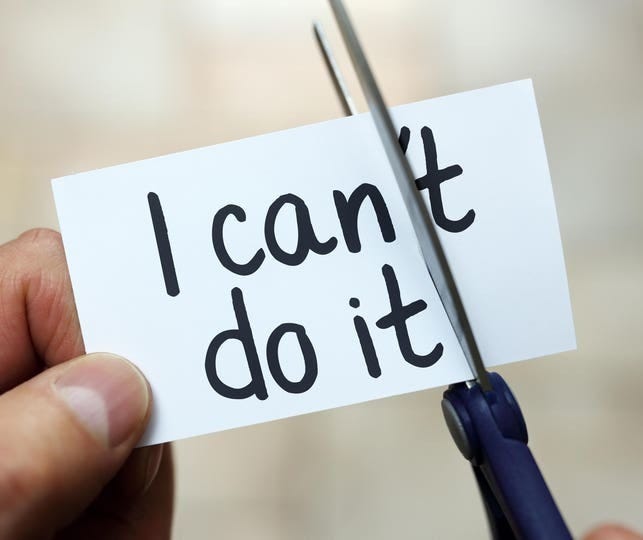
Resilience is something you need to do.
You can’t teach resilience like you teach geography or history or science - you need to teach it like swimming, or rugby, or dance. Do it: like this. Apply it in a game or a competition or a show: like this.
Do it.
Everything I read in the educational sphere treats resilience as a curriculum to impart - knowledge to acquire. It goes down rabbit holes of resistance - resist misinformation, resist temptation, resist social media, resist deep fake video or pictures. Resist, defend, you are under attack and the faceless world is out to exploit you, to get you, to trick you.
Some education that is.
(You can read the Schools Week article that prompted this post here).
But we could teach these: attempt these experiences, and keep attempting them, and this will develop your knowledge, agency, self-belief, courage … the qualities which added together will make you resilient in many other situations life will offer you as challenges and opportunities.
A totally different world we are educating you for, isn’t it?
The Resilience Passport
Now imagine if we offered students a resilience passport. Perhaps at Bronze, Silver and Gold.
Bronze: 5 from the Curriculum, 4 from Home Life, 4 from Extra Curricular
Silver: 5 from the Curriculum, 5 from Home Life, 6 from Extra Curricular
Gold: 5 from the Curriculum, 5+ from Home Life, 6+ from Extra Curricular, or 17 with any combination.
I’ve given this prompt to Gemini as a first draft:
I want to create a resilience passport for students in an English school from year 7 to year 11.
Give me a list of experiences which students can experience within the curriculum, in their home life, and as extra curricular activities put on by the school.
List a menu of 20 available in each year, under different headings. The list in each year does not have to be different to other years, although inevitably some will be because of age.
I do not need the experiences to be one-off experiences - they can be part of a programme. For example the Duke of Edinburgh awards, learning to be a referee or coach, joining the Cadets or Scouts etc.
But bear in mind what is practical for students in school, and students with a disadvantaged economic background.
Do you need any further information from me before you start?
You can change any number of experiences to make it fit your values and your context. But imagine if you offered something like this in your school, and students, tutors and parents bought into the concept.
How resilient would your students be by the end of year 11?
What other aspects of character would they also develop?
What is stopping you, actually?
The Resilience Passport: A Menu of Experiences
This passport is a log of your journey. Each experience you complete, reflect on, and get signed off is a stamp that proves you have the skills to navigate challenges and succeed.
Year 7: The Foundation Year
Focus: Settling in, trying new things, and basic self-management.
Within the Curriculum
Redraft & Improve: Act on teacher feedback to improve a piece of work after getting it back.
Class Presentation: Present your work to the class for at least one minute.
Group Project: Complete a group project, making sure everyone’s voice is heard.
Problem Solved: Get stuck on a new topic (e.g., in Maths or Science) and use a different method (e.g., textbook, video, asking a friend) to understand it.
New Skill: Learn a new practical skill in a lesson (e.g., in D&T, Art, PE, or Music).
Home Life & Community
First Meal: Cook a simple hot meal for yourself or your family.
Chore Champion: Take full responsibility for a weekly chore for one month without being reminded.
Teach a Skill: Teach a family member or friend a new skill (e.g., a game, a feature on a phone).
Fix It: Learn to fix something simple (e.g., sew on a button, fix a bike puncture).
Digital Detox: Have a 24-hour period with no social media.
Read for Pleasure: Finish a book that is not for school.
Ask for Help: Ask a family member for help with a problem you’ve been struggling with.
Extra-Curricular (School-Led)
Join Up: Join a school club and attend for at least one half-term.
Try a Sport: Try a new sport you’ve never played before.
House Pride: Represent your House in any school competition (e.g., sport, art, spelling bee).
First Aid Basics: Complete a basic first aid taster session.
Helping Hand: Volunteer to help at a school event (e.g., Open Evening, school play).
School Community: Attend a school event to support others (e.g., watch a school match, attend the concert).
Library Power: Volunteer as a student librarian for a week.
Map It: Navigate your way to a new place using a physical map.
Year 8: The Exploration Year
Focus: Deepening skills, navigating peer relationships, and taking small responsibilities.
Within the Curriculum
Lead a Little: Lead a small group activity within a lesson.
The Bounce-Back: Receive a disappointing grade, meet with the teacher, and make a clear plan to improve.
Long-Term Project: Plan and complete a project over a full half-term.
Healthy Debate: Take part in a formal class debate, arguing a point you may not personally agree with.
Peer Support: Help a classmate who is stuck on a problem in class.
Home Life & Community
Budget Boss: Manage a small, real budget (e.g., for a family “fakeaway” night, a gift for someone).
Plan an Outing: Plan a free family activity (e.g., a local walk, a park visit).
Digital Declutter: Unfollow accounts that make you feel bad.
DIY Meal: Cook a two-course meal from scratch.
Local Knowledge: Visit a local place of interest (e.g., library, museum, park) you’ve never been to.
Public Transport: Navigate a journey using public transport on your own.
Extra-Curricular (School-Led)
Buddy Up: Act as a “buddy” or mentor for a new Year 7 student for a term.
New Challenge: Try an activity you think you will be bad at (e.g., public speaking, coding, chess).
Showtime: Take part in the school production (on stage or backstage).
Charity Champion: Contribute to organising a form or house charity event.
Eco-Warrior: Join the school’s Eco-Committee or take part in a local litter-pick.
Careers Talk: Attend a careers talk and ask one question.
Long-Term Program: Be an active member of an external group (e.g., Scouts, Guides, Cadets, a local sports team).
Speak Out: Take part in a public speaking workshop or competition.
Enter & Compete: Enter a school-wide competition (e.g., writing, art, STEM).
Year 9: The Leadership Year
Focus: Identity, making choices, and looking beyond yourself.
Within the Curriculum
GCSE Choices: Research and finalise your GCSE option choices, including discussing them with a teacher.
Tough Topics: Research and present on a complex or controversial topic.
Group Conflict: Help resolve a disagreement or conflict within a group project.
Subject Mentor: Mentor a younger student in a subject you are strong in.
Real-World Maths: Complete a “real-world” finance or business challenge in a lesson.
Home Life & Community
Full Responsibility: Take full responsibility for a family meal (plan, budget, shop, cook, clean).
Community Care: Do something to help a neighbour or elderly relative.
Post-16 Research: Research two different post-16 options (e.g., college, apprenticeship) and discuss them with your family.
Personal Goal: Set and stick to a personal goal for 6 weeks (e.g., fitness, learning an instrument).
Polite Disagreement: Have a respectful disagreement with an adult and find a compromise.
Extra-Curricular (School-Led)
Bronze DofE: Complete the Bronze Duke of Edinburgh’s Award (school-subsidised).
Student Voice: Join the Student Council and attend meetings for a year.
Local Volunteering: Volunteer for a local community project (e.g., helping at a food bank, a park run).
Get Qualified: Gain a basic qualification (e.g., refereeing, coaching assistant, first aid).
Event Planning: Help organise a major school event (e.g., a “house” competition, a non-uniform day).
Work Visit: Attend a careers fair or visit a real workplace.
Financial Literacy: Complete a school-run course on basic financial literacy.
Run an Assembly: Help write and deliver a form or house assembly.
Run a Club: Help a teacher run a club for younger students for a term.
Taster Day: Attend a taster day at a local college, university, or workplace.
Year 10: The Focus Year
Focus: Handling academic pressure, long-term goals, and formal responsibility.
Within the Curriculum
Mock Exam Plan: Create and follow a revision timetable for mock exams.
Mock Results: Handle your mock results (good or bad) and create a clear action plan for improvement.
Coursework Climb: Complete a major piece of coursework, managing your time and multiple drafts.
Peer Feedback: Give detailed, constructive feedback to a classmate on their work, and act on theirs.
Work Experience: Successfully complete a one-week work experience placement.
Home Life & Community
Get a Bank Account: Open and manage your own bank account or savings account.
Plan B: Research and discuss a “Plan B” for your post-16 options.
CV Draft: Write your first CV and get feedback from an adult.
Independent Study: Set your own (non-homework) learning goal and achieve it (e.g., learn 50 signs in BSL, complete an online coding module).
Household Help: Help a family member with a “life admin” task (e.g., applying for something online, researching a utility bill).
Extra-Curricular (School-Led)
Silver DofE: Complete the Silver Duke of Edinburgh’s Award (school-subsidised).
Prefect/Leader: Be appointed to and serve in a formal leadership role (e.g., Prefect, Sports Captain).
Peer Mentor: Complete a peer-mentoring training programme and actively mentor a younger student.
Coach/Referee: Regularly coach or referee a junior sports team.
Regular Volunteering: Volunteer weekly for a full term (e.g., in the library, in a club, in the community).
Fundraising Leader: Lead the organisation of a charity fundraising event.
Mental Health: Complete a “Mental Health First Aid” taster or awareness course.
Interview Prep: Take part in a mock interview with an external guest.
Run a Session: Plan and run a club session or activity for younger students by yourself.
Portfolio: Create a “portfolio of achievement” (e.g., for an application or interview).
Year 11: The Summit Year
Focus: Managing high-stakes pressure, navigating transitions, and finishing strong.
Within the Curriculum
The Exam Gauntlet: Survive the full mock exam period with your wellbeing plan intact.
Final Revision Plan: Create and execute your final revision plan for the real GCSEs.
Academic Recovery: Deal with a significant academic setback (e.g., a poor mock) and get back on track.
Applications Sent: Complete and send all your post-16 applications by the deadlines.
The Interview: Prepare for and attend a formal interview for a college, apprenticeship, or job.
Home Life & Community
Exam Stress Plan: Create and share a plan with your family for how to manage stress during the exam season.
“Plan B” Talk: Have a mature conversation about what to do if results aren’t what you expect.
Teach to Learn: Teach a family member a difficult exam topic from start to finish.
Independent Logistics: Organise your own transport and logistics for an interview or open day.
Plan Your Summer: Create a positive plan for the first month of the summer holiday.
Extra-Curricular (School-Led)
Senior Leadership: Serve as a senior leader in the school (e.g., Head Prefect, House Captain).
Public Speaking: Speak in a whole-school assembly or at a major school event.
Major Award: Complete a significant long-term award (e.g., Gold DofE, highest rank in Cadets/Scouts).
Prom Committee: Help organise the Year 11 Prom or Leavers’ event.
School Ambassador: Act as a lead ambassador on a Y6 Open Evening, leading tours or speaking to parents.
Leavers’ Speech: Help write or deliver a leavers’ speech.
Life Skills Course: Complete a “Preparing for Adulthood” course (e.g., budgeting, cooking for one).
Results Day: Manage your own Results Day experience and finalise your next steps.
Positive Exit: Make a plan to say “goodbye” and “thank you” to the friends and teachers who helped you.
Give Back: Pass on your revision notes and advice to a Year 10 student.
What Sort of Characters and Students Will This Create?
Here are 3 pen portraits of students who have remained Bronze, Silver and Gold throughout their 5 years.
Gemini has naturally decided Bronze will be represented by a boy, and Gold by a girl. Which probably corresponds to the performance of boys and girls in your school. It isn’t inevitable though, is it?

1. The Bronze Achiever: Alex
His Journey (Always Bronze: 13+ tasks per year) Alex is a “do-what’s-required” student. He’s not naturally a joiner and is wary of the spotlight. In Year 7, he saw the passport as another checklist. He joined the coding club for a half-term (Y7#13), cooked a meal (Y7#6), and re-drafted his history essay when asked (Y7#1). He did his 13 tasks and got his Bronze. He’s repeated this pattern every year, selecting the path of least resistance: he’ll do the class presentation (Y7#2) but not the public speaking competition (Y8#19); he’ll attend a careers talk (Y8#17) but won’t apply to be a prefect (Y10#12).
His Character by Year 11: “The Capable Realist” By the end of Year 11, Alex has developed a functional and practical resilience. He is not fragile. Five years of logging his achievements have shown him, in concrete terms, that he can handle things.
Self-Management: He’s learned to cope with expected academic stress. He’s made and followed a mock exam plan (Y10#1) and handled a disappointing grade (Y8#2). He sees setbacks as normal, temporary, and fixable—not as personal failures.
Avoidance of “Stretch”: Because he never pushed into the higher-tier extra-curriculars, Alex’s comfort zone is still relatively small. He is a reliable team member but will not volunteer to lead the group. He has the skills to survive the exam gauntlet (Y11#1) but will find the process highly stressful because he’s less practised at managing voluntary high-pressure situations.
Quiet Competence: He’s quietly competent. He can cook for himself (Y9#6), he’s finished his applications (Y11#4), and he’s learned to ask for help (Y7#12).
In short: Alex’s resilience is reactive. When a challenge is placed in front of him, the passport has given him the tools to cope and persevere. He’s a solid, capable, and reliable young adult, but he is not yet someone who actively seeks out challenges.

2. The Silver Achiever: Benita
Her Journey (Always Silver: 16+ tasks per year) Benita is a consistent, proactive, and “balanced” student. She saw the value in the passport early on. The Silver award required 5 (Home) and 6 (Extra-Curricular) tasks, which meant she couldn’t just do the easy ones. She had to stretch. In Year 9, she not only did her GCSE choices (Y9#1) but also joined the Student Council (Y9#12) and completed her Bronze DofE (Y9#11). In Year 10, she was a peer mentor (Y10#13) while also drafting her CV (Y10#8) and completing work experience (Y10#5). She has consistently balanced her academic work with genuine service and self-development.
Her Character by Year 11: “The Proactive Contributor” By the end of Year 11, Benita’s resilience is robust and empathetic. She has not only learned to manage herself but has also learned to take responsibility for others.
Leadership & Empathy: Her experience as a buddy (Y8#12) and peer mentor (Y10#13) has been transformative. She’s not just focused on her own problems; she’s learned to listen, resolve conflicts (Y9#3), and support others. This makes her a natural and respected leader.
Time Management: The DofE and regular volunteering (Y10#15) taught her long-term commitment and time management. She’s not just “surviving” the exam gauntlet (Y11#1); she’s managing it alongside her other responsibilities because she’s been practising this balance for years.
Confidence: She is quietly confident. She’s taken part in debates (Y8#4), helped run a club (Y9#19), and aced her mock interview (Y10#18). She sees the “real world” as something to engage with, not to fear.
In short: Benita’s resilience is proactive. She has learned to anticipate challenges, make long-term plans, and lead others. She’s a highly organised, empathetic, and confident young adult who will not just succeed, but also contribute to any community she joins.

3. The Gold Achiever: Chloe
Her Journey (Always Gold: 17+ tasks, exceeding all targets) Chloe is an “opportunity-seeker.” She saw the passport not as a set of tasks, but as a menu, and she wanted to try everything. She didn’t just meet the Gold criteria; she smashed it. She did Bronze DofE in Y9, Silver in Y10, and is well on her way to Gold (Y11#13). She was a peer mentor (Y10#13) and then a Senior Prefect (Y11#11). She not only ran a club (Y9#19) but ran a whole fundraising event (Y10#16). She has completed high-level “Life Skills” courses (Y11#17) and set her own independent learning goals (Y10#9) just for the joy of it.
Her Character by Year 11: “The Transformative Leader” By the end of Year 11, Chloe’s resilience is “antifragile”—she doesn’t just withstand stress and challenge; she actively grows from it.
Intrinsic Motivation: She is no longer motivated by the stamp in the passport. Her motivation is internal. She has learned that the value is in the experience—the failure, the hard work, and the eventual success.
Poise Under Pressure: Chloe has failed more times than Alex has tried. She’s dealt with a bad mock (Y11#3), handled difficult group conflicts (Y9#3), and delivered a whole-school assembly (Y11#12). She is comfortable with discomfort. As a result, she views the high-stakes GCSEs not as a terrifying threat, but as a personal challenge to be met with a calm, methodical plan.
A “Portfolio of Self”: She doesn’t just think she’s resilient; she knows it. She can point to a dozen major, long-term projects she has completed. She is articulate, poised, and can talk to adults with ease from her experience as a School Ambassador (Y11#15) and at her mock interviews (Y10#18). She is a systems-level thinker, as shown by her work on the Prom Committee (Y11#14).
In short: Chloe’s resilience is transformative. She has a growth mindset embedded in her character. She seeks out challenges for her own development, leads with empathy and confidence, and has a proven track record of seeing complex, long-term projects through to completion. She is exceptionally well-prepared for the transition to adulthood.